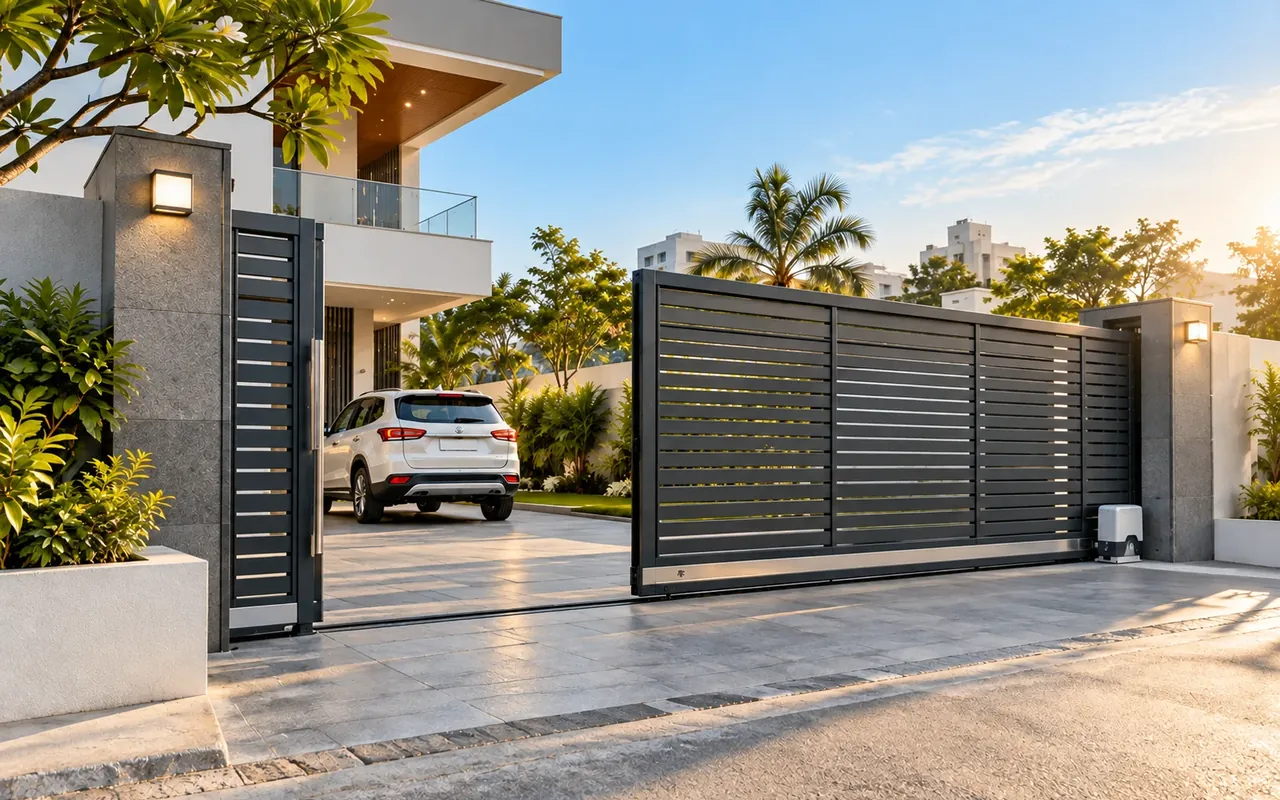
Most modern gate operators are electromechanical: a motor turns gears that move the gate through a pinion and rack, an arm or a chain.
AC operators run directly from mains power.
Ask about the duty cycle, which is how many openings the operator is built to handle per hour or per day.
Electromechanical and hydraulic drives
Most modern gate operators are electromechanical: a motor turns gears that move the gate through a pinion and rack, an arm or a chain. Hydraulic drives push the gate with oil pressure and are less common on new residential jobs.
The drive type affects noise, maintenance and how smoothly the gate starts and stops.
AC and DC motors
AC operators run directly from mains power. DC operators use a low-voltage motor, which makes battery backup and soft starts easier to add. Many installers choose DC where power cuts are common.
Neither type is better in every case. The right choice depends on gate weight, how often the gate is used and the backup you need.
Questions to ask your installer
Ask about the duty cycle, which is how many openings the operator is built to handle per hour or per day. Ask how the gate is released by hand during a power cut and whether spare parts are easy to get.
Quick checklist before you decide
What to check on site
Gate weight, width and condition
Available space beside or behind the gate
Power supply and backup needs
Number of users and remotes
Safety devices for pedestrians and vehicles
How installation usually goes
Survey and preparation
Installation starts with a site survey of gate weight, width, alignment, ground level and power point. Civil work such as a foundation plate or rack track is prepared, the operator and controller are fitted, safety devices are set, and the owner is trained on remotes and manual release.
How the system works day to day
An operator (motor) moves the gate leaf. A control board decides when to open, stop or close, and reads inputs from remotes, keypads, RFID readers or a mobile app. Photocells and safety edges stop or reverse the gate if something is in the way.
Frequently asked questions
How do I know if my gate can be automated?
+
The gate must be sound, reasonably light for its size and move freely by hand. A site survey checks weight, alignment, ground level and space, and any repair needed first.
What safety devices should an automatic gate have?
+
Photocells across the opening, a safety edge on the moving leaf, a warning lamp and a manual release are the basics. Pedestrian and vehicle paths should be considered separately.
How many remotes can one gate controller learn?
+
It depends on the controller model. Ask for the memory capacity of the controller you are quoted, especially for communities with many users.
How often should an automatic gate be serviced?
+
Gates used daily benefit from a scheduled check of the motor, rack or arms, limit settings and safety devices. Frequency depends on use and site conditions.
Does Zenitrix offer a free site visit in Hyderabad?
+
Yes. We visit, measure and send a written quote. Call or WhatsApp +91 85006 32002 to book a visit.
Can Zenitrix repair or service systems installed by other companies?
+
Yes. We repair and service gates, doors, barriers and shutters from any brand, and offer AMC plans.